



Causes of Ovarian Cancer, Symptoms and Treatments
Overview
Ovarian cancer is commonly referred to as “a silent killer”. Due to the lack of symptoms in the initial stage, it proves to be challenging to detect the disease until it moves to the advanced stage. Ovarian cancer worldwide affects many women, and it’s the 8th most common cancer to occur in women. Additionally, due to late diagnosis, the survival rate of this cancer continues to be a problem.
What is ovarian cancer?
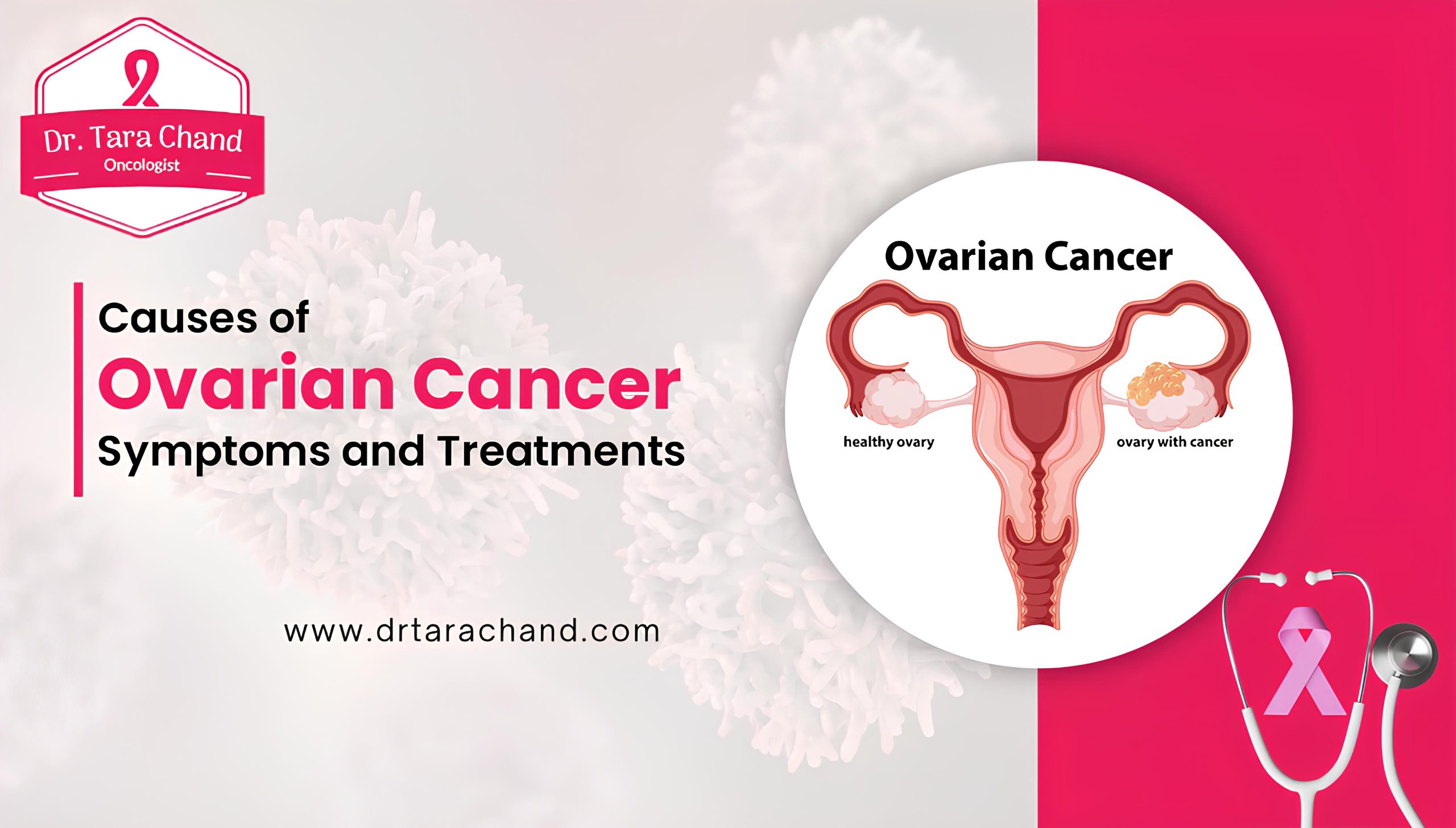
Ovarian cancer develops in the ovaries, the reproductive system in the woman’s body that assists in creating eggs and hormones such as oestrogen or progesterone. Ovarian cancer grows when unusual cells multiply in your ovaries or the fallopian tubes in an uncontrolled manner. Thus, when these cells multiply, they create a mass referred to as a tumor. And if left untreated promptly, they infiltrate neighboring tissue and spread throughout the body. Although it is asymptomatic, knowing about the causes and symptoms of ovarian cancer can help in early detection. Therefore, in this blog, let us understand all the details and the cause of cancer so that you can act immediately.
What are the symptoms of ovarian cancer?
As such, there are no symptoms of ovarian cancer at an early stage. By the time it starts showing some symptoms, it’s already spread throughout the abdomen, which makes it difficult to find out. But knowing the symptoms can help you start the treatment sooner. Here are the symptoms of ovarian cancer:
- You may have pelvic or abdominal pain.
- Constant bloating
- Swole in the stomach area
- Bowel changes such as constipation or diarrhoea
- You eat a small amount of food but get full early or lose your appetite.
- Frequent urination
- Back pain
- Fatigue
- Changes in menstrual cycle
- Painful intercourse
- Vaginal discharge or irregular vaginal bleeding.
Make an appointment with a doctor if you notice these signs in your body as early as possible.
What are the causes of ovarian cancer?
Although the causes of ovarian cancer are yet unknown. But yes, there is some slight chance that certain factors can increase the chance of developing ovarian cancer. Causes that increase the risk of developing ovarian cancer are:
- Family history: If your mother or any other close relative had it, then there’s a chance that you might develop ovarian cancer. Moreover, if there is a history of breast or colon cancer, then there is also a high chance of developing it.
- Age: Chances of ovarian cancer can be increased with age, especially after 60.
- Obesity: Being overweight can also be an issue in developing ovarian cancer. If a woman’s BMI is more than 30, then there is a high chance that she may be at risk of developing ovarian cancer.
- Hormonal issues: Early menstruation, late menopause, never giving birth, or fertility issues can increase the chance of developing ovarian cancer. Additionally, if women take hormone replacement therapy, it can also increase the risk.
- Genetic factors: If in your family, genes of BRCA1 or BRCA2 automatically increase the higher chance of developing ovarian cancer.
- Endometriosis: If a woman develops the condition where tissue similar to the lining of the uterus grows outside of the uterus, then it increases the risk of ovarian cancer.
What is the treatment for ovarian cancer?
The treatment of ovarian cancer depends on the stage. Moreover, the types of tumors and the overall health also play a major role in treating ovarian cancer. Although medical science has developed, if cancer is detected at an early stage, then it improves the survival rate. The treatment of ovarian cancer is:
- Surgery: It’s the first treatment that treats ovarian cancer. In this treatment, the main goal is to remove as much of the tumor as possible.
- Chemotherapy: This therapy is done before the surgery or after the surgery. Before the surgery, it shrinks the cancer cells, and after the surgery, it kills the remaining cancer cells. Moreover, it can be in the form of medicines too.
- Hormone therapy: Some ovarian cancers use hormones to grow, so this treatment blocks those hormones that help in cancer growth.
- Radiation therapy: It is used to kill cancer cells. But it is not commonly used in ovarian cancer.
Final thought
As we read above, which proved that ovarian cancer is a silent cancer that kills your body silently. There is only one way to go through this, and that is early detection. If you find any odd symptoms in your body, then consult with Dr Tarachand Gupta, who provides ovarian cancer treatment in Jaipur with compassion and the best care, because only early detection saves lives.