



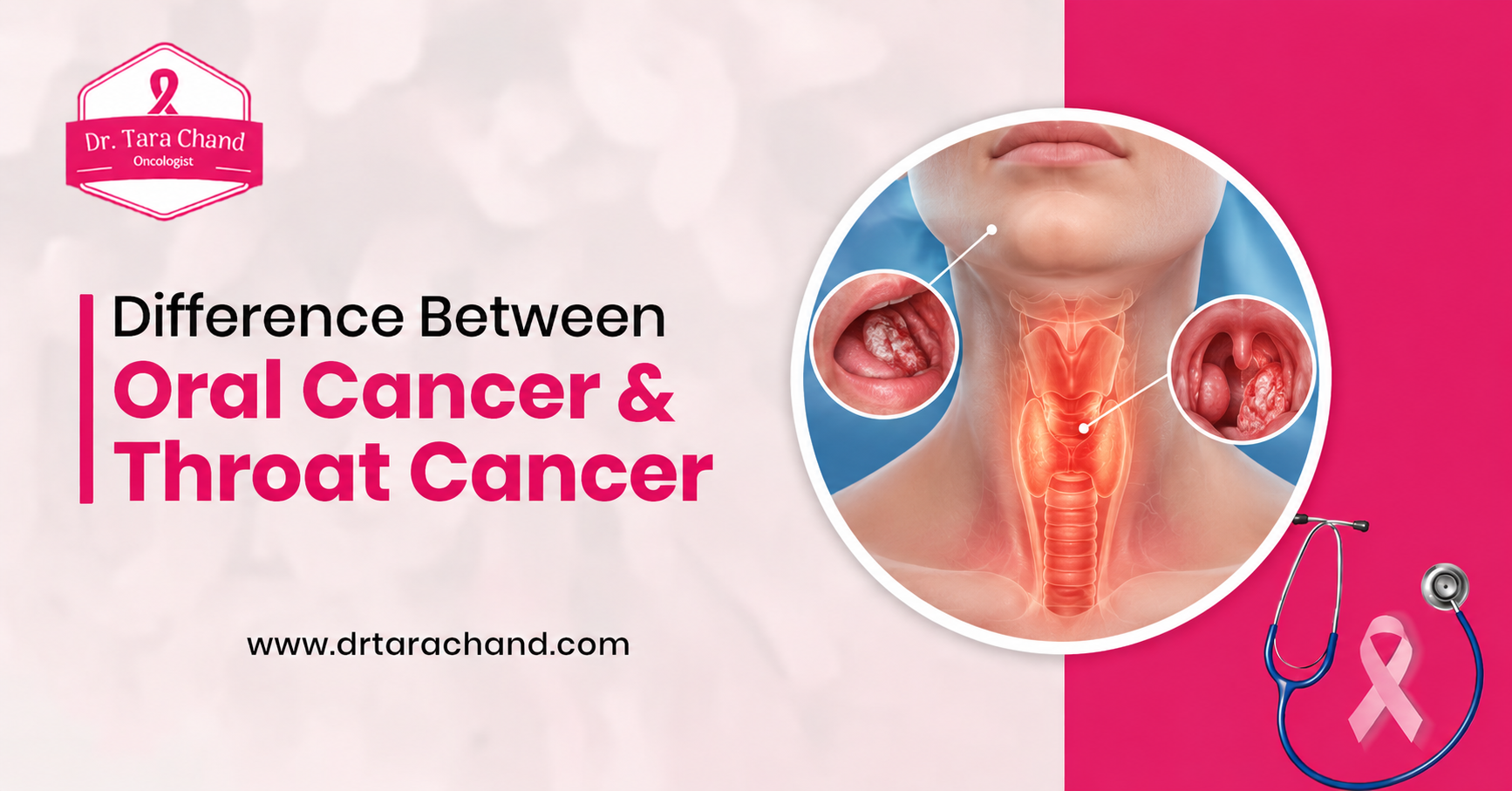
Difference Between Oral Cancer & Throat Cancer
Cancer refers to a group of diseases where cells grow abnormally and uncontrollably, with the potential to invade nearby tissue and spread to other parts of the body. It can begin as a small, localised growth that hasn’t yet spread to other organs. Common warning signs include a persistent lump, unexplained bleeding, a prolonged cough, unexplained weight loss, or a change in bowel habits — though these are not the only possible symptoms. A medical oncologist in Jaipur can help identify other early warning signs that are easy to miss.
Understanding the difference between oral and throat cancer starts with looking closely at how each one develops, where it appears, and how it’s treated. Though people often use the terms oral cancer and throat cancer interchangeably, they affect different parts of the body and come with distinct symptoms and treatment approaches.
What Is Oral Cancer?
Oral cancer refers to a growth or sore that develops inside the mouth. It can appear on the lips, tongue, cheeks, floor of the mouth, soft palate, sinuses, and other areas within the oral cavity.
Oral Cancer Symptoms
Common oral cancer symptoms include:
- Swelling, thickening, lumps, bumps or rough spots inside the mouth
- Unexplained bleeding or numbness in the mouth
- Persistent pain in the ear
- Difficulty opening the mouth fully or changes in jaw movement
A closer look at these symptoms of oral cancer, along with causes and treatment can help you understand which changes need medical attention right away.
Oral Cancer Causes
Like most cancers, oral cancer causes are often linked to a combination of lifestyle and biological factors — tobacco use, excessive alcohol consumption, prolonged sun exposure on the lips, and certain viral infections are among the more common contributors. A detailed look at the risk factors of oral cancer can help you understand which habits may be increasing your own risk.
How Is Oral Cancer Diagnosed?
Much like a routine dental check-up, a doctor may recommend an oral cancer screening if anything unusual is noticed. A biopsy is typically used to confirm whether the changes seen are cancerous.
Oral Cancer Treatment in Jaipur
Treatment for oral cancer generally follows the same principles used for other cancers, most often radiation therapy and chemotherapy, depending on the stage and location of the growth. Patients looking for structured, specialist-led oral cancer treatment in Jaipur can consult a medical oncologist to understand which treatment approach fits their specific diagnosis.
What Is Throat Cancer?
Throat cancer affects the organs used for swallowing, speaking and breathing. To get a fuller picture of the condition, it helps to read what you need to know about throat cancer, since it can develop in several different areas of the throat depending on the case.
Throat Cancer Symptoms
Common throat cancer symptoms include:
- Voice changes or hoarseness that doesn’t go away
- Headaches or a lump in the neck
- Unexplained weight loss
- Difficulty swallowing or breathing
A detailed breakdown of these signs of throat cancer can help you recognise symptoms before they progress further.
Throat Cancer Causes
Throat cancer causes are often linked to long-term tobacco and alcohol use, along with HPV infection in some cases. Interestingly, one of the most common types of throat cancer develops in the pharynx — the region just behind the nose that extends toward the neck — which also explains why symptoms can sometimes be mistaken for common throat infections early on.
How Is Throat Cancer Diagnosed?
To diagnose throat cancer, doctors typically review a patient’s overall health, smoking history, drinking habits and sometimes sexual history, since certain infections are linked to the disease. They use specialised devices to get a clear view of the throat, and a biopsy is usually recommended if anything unusual is found. Imaging tests may also be used to check for a tumour and understand its size or spread.
Throat Cancer Treatment in Jaipur
Throat cancer treatment depends largely on the stage of the disease at diagnosis, and there are generally four recognised stages based on severity. The goal of treatment is to remove or shrink the tumour while preventing further spread. For patients exploring throat cancer treatment in Jaipur, consulting an oncologist early can help determine the most suitable treatment path based on the stage and exact location of the cancer.
Key Differences: Oral Cancer vs Throat Cancer
While both fall under the broader umbrella of head and neck cancers, oral cancer and throat cancer differ in where they develop and how they typically progress:
- Location: Oral cancer develops inside the mouth, while throat cancer develops in the pharynx, located behind the nose and extending toward the neck.
- Rate of progression: Throat cancer tends to grow and spread faster, whereas oral cancer often starts with milder changes that develop more gradually, though it can become severe if left untreated.
- Common causes: Both share risk factors like tobacco and alcohol use, but throat cancer is more frequently associated with HPV infection.
- Symptoms: Oral cancer tends to show visible signs, such as lumps, sores or bleeding in the mouth, while throat cancer often causes changes in voice, swallowing, or breathing instead.
Conclusion
Understanding the difference between oral and throat cancer can help you recognise symptoms earlier and seek the right kind of care without delay. If you notice any of the warning signs discussed above, don’t wait for them to worsen — consult a qualified oncologist in Jaipur for a proper evaluation. Whether it turns out to be oral cancer or throat cancer, early diagnosis and timely treatment make a meaningful difference to the outcome.
FAQs
1. Can oral cancer spread to the throat?
Yes, if left untreated, oral cancer can spread to nearby tissues, including the throat, which is why early diagnosis is important.
2. Is throat cancer more dangerous than oral cancer?
Throat cancer tends to grow and spread faster than oral cancer in many cases, but the severity ultimately depends on the stage at diagnosis and how quickly treatment begins.
3. What is the survival rate for oral and throat cancer?
Survival rates vary widely depending on the stage at diagnosis, the exact location of the cancer, and how early treatment starts. A specialist can give a more accurate picture based on individual test results.
4. Do oral and throat cancers share the same causes?
Tobacco and alcohol use are common risk factors for both, though throat cancer is also strongly linked to HPV infection, which isn’t as significant a factor in most oral cancer cases.
5. Can a dentist detect oral cancer during a routine check-up?
Yes, dentists often notice early warning signs like lumps, sores or unusual patches during a regular dental exam and may recommend further testing if needed.
6. Does smoking increase the risk of both oral and throat cancer?
Yes, smoking is one of the most significant risk factors for both oral and throat cancers, along with heavy alcohol consumption.
7. What is the first sign people usually notice with throat cancer?
A persistent change in voice, a lump in the neck, or difficulty swallowing are often among the first noticeable signs of throat cancer.
8. Should I see a doctor if a mouth ulcer doesn’t heal?
Yes, a mouth ulcer or sore that doesn’t heal within two to three weeks should be examined by a doctor, as it can sometimes be an early sign of oral cancer.