



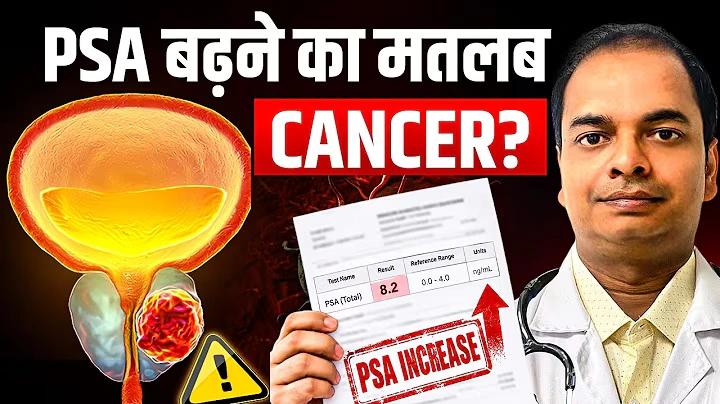
क्या High PSA हमेशा Prostate Cancer का संकेत होता है?
Doctor, my PSA is high. Do I have prostate cancer? Doctors hear this question every week. A man gets a routine health check-up, sees one flagged value, searches online, and within minutes the whole family is anxious. The truth is calmer: high PSA levels are a signal to investigate, not a diagnosis. This guide is based on the explanation given by Dr. Tara Chand Gupta, a medical oncologist in Jaipur with a DM in Medical Oncology from Tata Memorial Hospital, Mumbai, and over 15 years of experience treating cancer patients.
PSA का मतलब क्या है? What Does PSA Mean?
PSA stands for Prostate Specific Antigen. It is a protein made by the prostate gland, and a small amount is normally present in every man’s blood. Anything that irritates, inflames, enlarges or damages the prostate can push the number up, which is why a PSA test is a useful alert but never a final answer.
Does High PSA Always Mean Prostate Cancer?
No. In many men with prostate cancer the PSA is raised, so the link between high PSA and prostate cancer is real. But a raised value alone does not prove cancer. Prostate cancer is diagnosed only after a biopsy confirms it, never on the basis of a blood report.
Common Causes of High PSA Levels Without Cancer
Prostate cancer is only one of several reasons the number rises. High PSA without cancer is quite common, and the usual causes are:
- Benign prostatic hyperplasia (BPH): after a certain age the prostate gradually enlarges. More prostate tissue means more PSA. This is the most common non-cancerous cause.
- Prostate infection or inflammation (prostatitis): an infection of the prostate can raise PSA sharply for a while.
- Urinary tract infection: an infection that involves the prostate can have the same effect.
- Catheter or instrument use: any procedure in which the prostate is handled or disturbed.
- Recent prostate biopsy or surgery: the gland releases extra PSA while it heals.
- Injury or trauma to the pelvic region.
- Temporary triggers: some studies suggest that activities such as long cycling sessions may raise PSA briefly, though the evidence is limited.
This is why a single high reading should lead to evaluation, not panic.
Understanding Normal PSA Levels and Prostate Cancer Risk
Many people believe that the higher the PSA, the higher the prostate cancer risk, and this belief creates a great deal of fear. Normal PSA levels are documented by laboratories, and a commonly used cut-off is around 4 ng/mL, though the acceptable range rises with age. Crossing that line does not confirm cancer.
To judge the real risk, doctors look beyond one number. They consider:
- PSA density (PSA relative to the size of the prostate)
- PSA velocity and the trend over repeated tests
- Age and symptoms
- Findings of the clinical examination
- MRI results, where needed
Only after this combined assessment does the doctor decide whether further testing is necessary.
When Is an MRI Needed?
An MRI of the prostate is considered when high PSA levels are significant, symptoms are present and the doctor’s overall assessment suggests it is worthwhile. The MRI report grades suspicious areas on a scale of 1 to 5. A higher grade indicates a greater chance of cancer, but the scan is suggestive, not confirmatory. A doubtful MRI still needs to be followed up.
When Is a Biopsy Required?
Not every raised PSA needs a biopsy. The doctor first reviews the clinical features, the MRI, PSA density, PSA velocity and the trend over time. If these point towards cancer, a prostate biopsy is planned. A standard 12-core biopsy takes six samples from each lobe of the prostate.
The biopsy tells you three things: whether cancer is present, how aggressive it is (its grade), and which risk category it falls into. That risk category, along with the PSA, guides the next investigations and the treatment plan.
What If the Biopsy Confirms Cancer?
A confirmed diagnosis is followed by staging, using scans such as CT, bone scan or MRI, to see whether the disease is limited to the prostate. Prostate cancer has several effective treatment options, and many men live long, healthy lives after treatment. You can compare them in this guide to the pros and cons of different prostate cancer treatments.
Key Takeaway
Do not panic over high PSA levels on a single report. Repeat the test if advised, get a proper evaluation, and let the doctor decide on the next step. Healthy habits also lower risk; here is how to avoid prostate cancer.
Frequently Asked Questions
1. What is the best test for the prostate?
There is no single best test. Doctors usually begin with a PSA blood test and a digital rectal examination, then add an MRI if needed. Only a biopsy can confirm cancer. Read more about prostate cancer signs and screening.
2. What are the 5 warning signs of prostate cancer?
Frequent urination (especially at night), a weak or interrupted urine stream, blood in urine or semen, persistent pain in the lower back, hips or pelvis, and erectile problems. Early prostate cancer often causes no symptoms at all. See these warning signs of prostate cancer.
3. What is a dangerous PSA level?
No single number is “dangerous”. A value above about 4 ng/mL is usually investigated, and levels above 10 ng/mL raise more concern, yet cancer can exist at lower values and BPH can raise PSA without cancer. The trend and the full evaluation matter more. Learn about prostate cancer treatment in Jaipur and how PSA, MRI and biopsy fit together.
4. Is frequent urination a symptom of prostate cancer?
It can be, but it is far more often caused by an enlarged prostate (BPH) or an infection. Frequent urination alone does not mean cancer, but if it persists, get it checked. Here are the 10 signs of prostate cancer.
5. What is the best treatment for an enlarged prostate?
It depends on the symptoms. Mild cases need lifestyle changes and monitoring, moderate cases are treated with medicines, and severe cases may need a procedure such as TURP, as decided by a urologist. If cancer is found instead, the options are different; compare the prostate cancer treatments.
6. What should a normal prostate be?
A healthy young adult’s prostate is roughly walnut-sized, about 20-25 mL in volume, and it naturally grows with age. A normal prostate does not need treatment, but regular check-ups after 50 and healthy habits help; see prostate cancer prevention.
7. What problems does an enlarged prostate cause in the body?
It can cause frequent and night-time urination, a weak stream, difficulty starting, a feeling of incomplete emptying, repeated urinary infections, and in severe cases urinary retention or kidney strain. These overlap with cancer symptoms, so compare them with the symptoms of prostate cancer.