



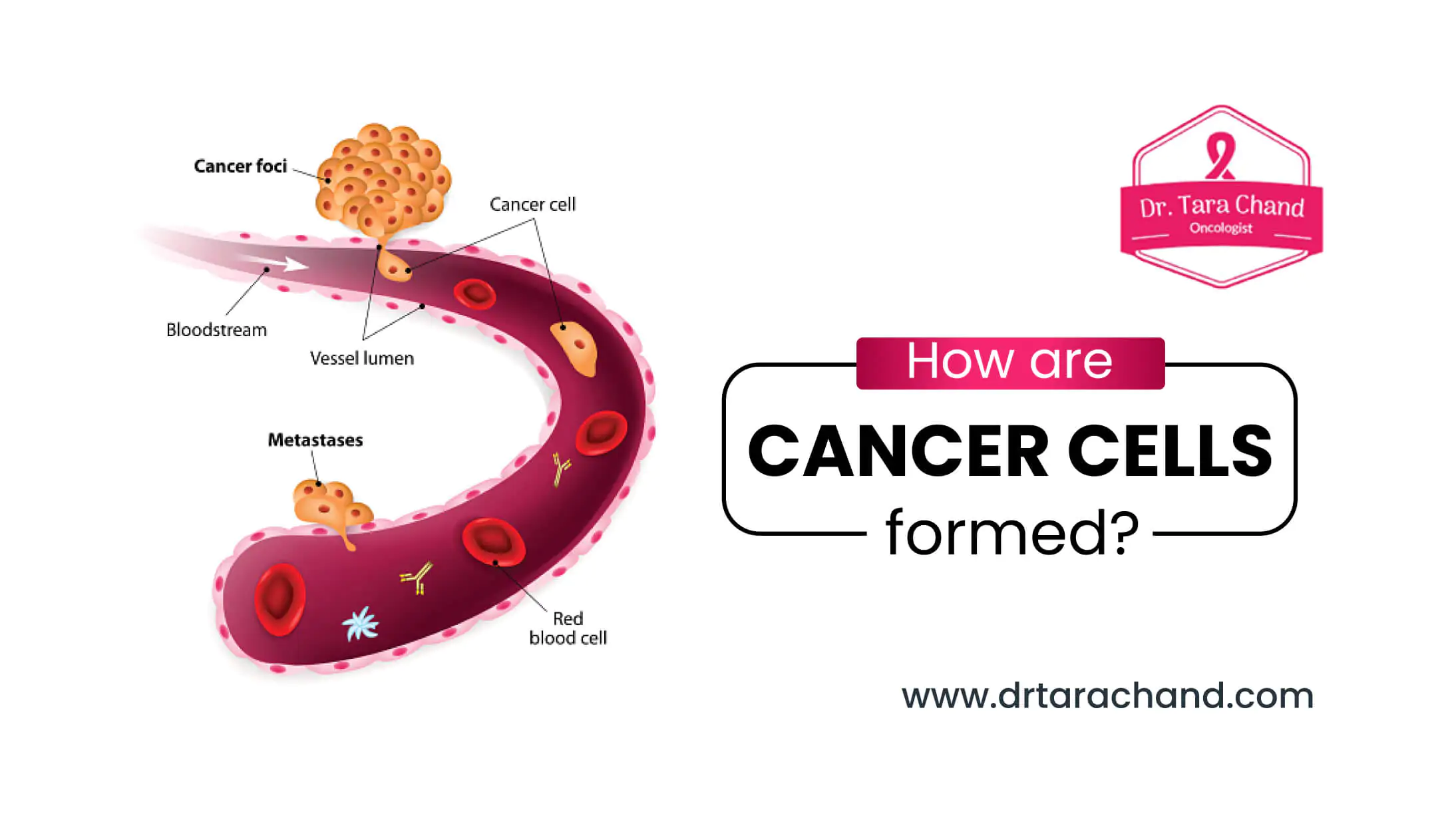
How are cancer cells formed?
how are cancer cells formed? : Our bodies have trillions of cells that are forming tissues and organs. These organs and tissues make up our bodies. The nucleus of each cell contains instructions that inform the cell when to grow, work, divide, and eventually die. In a normal situation, our bodies remain healthy because our cells obey these instructions.
However, if there is a mutation in DNA or damage to it, a gene is capable of undergoing mutation. The instructions included in mutated genes become jumbled, which prevents them from functioning as intended. It is posasible for this to induce cells that should be resting to instead divide and expand uncontrollably, which can lead to cancer.
When a person is dealing with cancer, it is integral to reach out to the best doctor around. You can approach Dr. Tara Chand Gupta in Jaipur to get the treatment at affordable prices. He is among those Medical Oncologist in Jaipur who is not only having expertise in treating the specific type of cancer but also suggest to you whether the same is curable or not.
How are Cancer cells formed?
When genes are functioning normally, they communicate with cells to let them know when it is the optimal moment to grow and divide. When cells divide, they produce identical duplicates of the original. One cell divides into 2 identical cells, then 2 cells divide into 4, and so on. Cells in an adult generally only grow and divide to produce more cells when the body requires them, such as when they need to replace cells that have been injured or have aged.
But cancer cells are different. Gene changes in cancer cells are what transform a normal cell into a cancer cell. Normal cells do not have cancer genes. These gene mutations may be inherited, may develop over time as we get older, and our genes wear out or may develop if we are exposed to something that damages our genes, such as cigarette smoke, alcohol, or ultraviolet (UV) radiation from the sun. These gene mutations can be inherited, can develop over time as we get older, and our genes wear out or can develop if we are exposed to something.
A cancer cell doesn’t act like a normal cell. It begins to grow and divide uncontrollably rather than passing away as it should at the appropriate time. They also do not mature to the same extent as typical cells do. Therefore they continue to be immature. Although there are wide different varieties of cancer, they all begin with cells that are growing uncontrollably and without control. This can happen in a variety of organs and tissues. It’s possible for cancer to begin in any cell in the body.
How does cancer spread?
Gene mutations that occur in cancer cells disrupt the usual instructions that the cell carries, which can lead to the cell either growing uncontrollably or failing to die when it should. Because cancer cells behave differently than normal cells, a tumor can continue to spread even after it has been treated.
A tumor will form and expand as a result of the division of cancer cells. Normal cells and cancer cells have the same requirements for survival. They can only grow and maintain their existence if they receive oxygen and nutrients from the bloodstream. When a tumor is in its first stages, it is very easy for it to develop since it is receiving oxygen and nutrients from adjacent blood vessels.
However, as a tumor expands, it requires a greater volume of blood to supply the cancer cells with oxygen and other nutrients. Therefore, cancer cells communicate with surrounding tissue to encourage the growth of new blood vessels within a tumor. This process is angiogenesis, is one of the factors that contribute to the growth and expansion of tumors. In addition to this, it makes it easier for cancer cells to enter the bloodstream and travel to other organs and regions of the body. There is a significant amount of research being done on the possibility of employing medications that limit the formation of new blood vessels which would cause a tumor to stop growing and possibly even shrink.
How does cancer grow and spreads?
By exerting pressure on the normal tissue that is adjacent to a growing tumor, cancer cells have the potential to invade and invade neighboring tissues and structures. In addition, as they proliferate, cancer cells produce enzymes that are capable of destroying normal cells and tissues. When cancer spreads into neighboring tissue, this process is referred to as local invasion or invasive cancer.
Cancer has the ability to metastasize or spread to other areas of the body from its original location. Metastasis is the name given to this process. It is possible for cancer cells to metastasize when they separate from the primary tumor and migrate to a different part of the body via the circulatory or lymphatic systems.
Where can cancer potentially spread and its stage?
The vast majority of malignancies have the capability of spreading to other parts of the body. Because of this, medical professionals were able to construct staging systems, which are in use to classify malignancies according to information about where the disease is located in the body and whether or not it has spread from where it initially began.
There is a standard staging system for malignancies that ranges from one to four and is typically denoted by the Roman numerals I, II, III, or IV. Doctors are better able to forecast how cancer will develop if they have a better understanding of how it spreads and where it might expand to. Additionally, this assists them in treatment planning and providing appropriate supportive care.
Cancer has the potential to spread to any part of the body; however, the lymph nodes, bones, brain, liver, or lungs are the organs in which it is most likely to do so.
Why does cancer occasionally recur after it has been treated?
After receiving therapy, cancer can recur on occasion. This is what we refer to as a recurrence. Even if only a single cancer cell is left behind, it is still possible for it to develop and divide into a new tumor. A new tumor can start to form in the same place of the body where cancer first originated, or the disease may have spread to another part of the body through the blood or the lymphatic system, where it then grows into a new tumor.
Both of these scenarios are possible. Because of this, medical professionals will frequently utilize a different treatment immediately after the initial treatment, such as administering chemotherapy after surgery. This type of treatment is “adjuvant therapy”. The purpose of adjuvant therapy is to assist in preventing cancer from returning in the event that any cancer cells are still present in the body after primary treatment.
Sometimes the treatment will stop functioning because the cancer cells have become resistant to it, and this will cause the cancer cells to stop being eliminated. Therefore, cancer that was getting better or had even gone could start growing again and getting worse. This may occur as a result of a mutation that occurs inside the genes of the cancer cells.
Cancer cells that have undergone certain gene mutations become resistant to chemotherapy and other medication therapies. If a treatment no longer seems to be working for you, your physician may recommend that you try something different.
Remission or complete recovery:
Treatment is often successful in curing many forms of cancer. However, even decades after treatment, cancer that is in consideration as curable can recur. Because of this, some medical professionals prefer to use the phrase “the cancer is in remission.” When an illness (like cancer), for example, goes into remission, it signifies that there are fewer signs and symptoms of the condition or that they have totally disappeared.
FAQ: How are cancer cells formed?
Q.1 – What are the different types of cancer cells?
Answer – There are different types of cancer cells, and they all have different characteristics. The type of cancer cells depends on the type of the tumor and its size.
Cancer cells can be classified into three broad categories:
1) Small cell carcinoma- this type of cancer starts from small, round, or oval-shaped cells that can grow rapidly in size and spread to other parts of the body
2) Large cell carcinoma- this type of cancer starts from large cells that can grow rapidly in size and spread to other parts of the body
3) Undifferentiated: this type of cancer remains undifferentiated from the perspective of the cell.
Q.2 – How are cancer cells formed?
Answer – Cancer cells are formed when normal cells in the body start to grow uncontrollably and form a mass of tissue.
Q.3- How does a cell become cancerous?
Answer – Cancer cells are not the same as healthy cells. They are usually abnormal, and their DNA has been altered. The process of becoming cancerous starts when a cell mutates or changes its genetic code. This causes it to become abnormal. There are many factors that can lead to this mutation, such as exposure to radiation and smoking.
Q.4 – What are the symptoms of cancer?
Answer – Cancer symptoms vary depending on the type of cancer, but they may include:
- painless or lumpy lumps on the skin or in other parts of the body. This includes underarm, groin, breast, and neck areas;
- changes in bowel habits (constipation or diarrhea),
- weight loss,
- nausea and vomiting
- weakness and fatigue
- fever and chills
- frequent urination or increased thirst
- cough with mucus
- persistent sore throat
Q.5 – Who is the best doctor for cancer treatment in Jaipur?
Answer – Dr. Tara Chand Gupta is the best doctor for Cancer treatment in Jaipur, Rajasthan.
Read More