

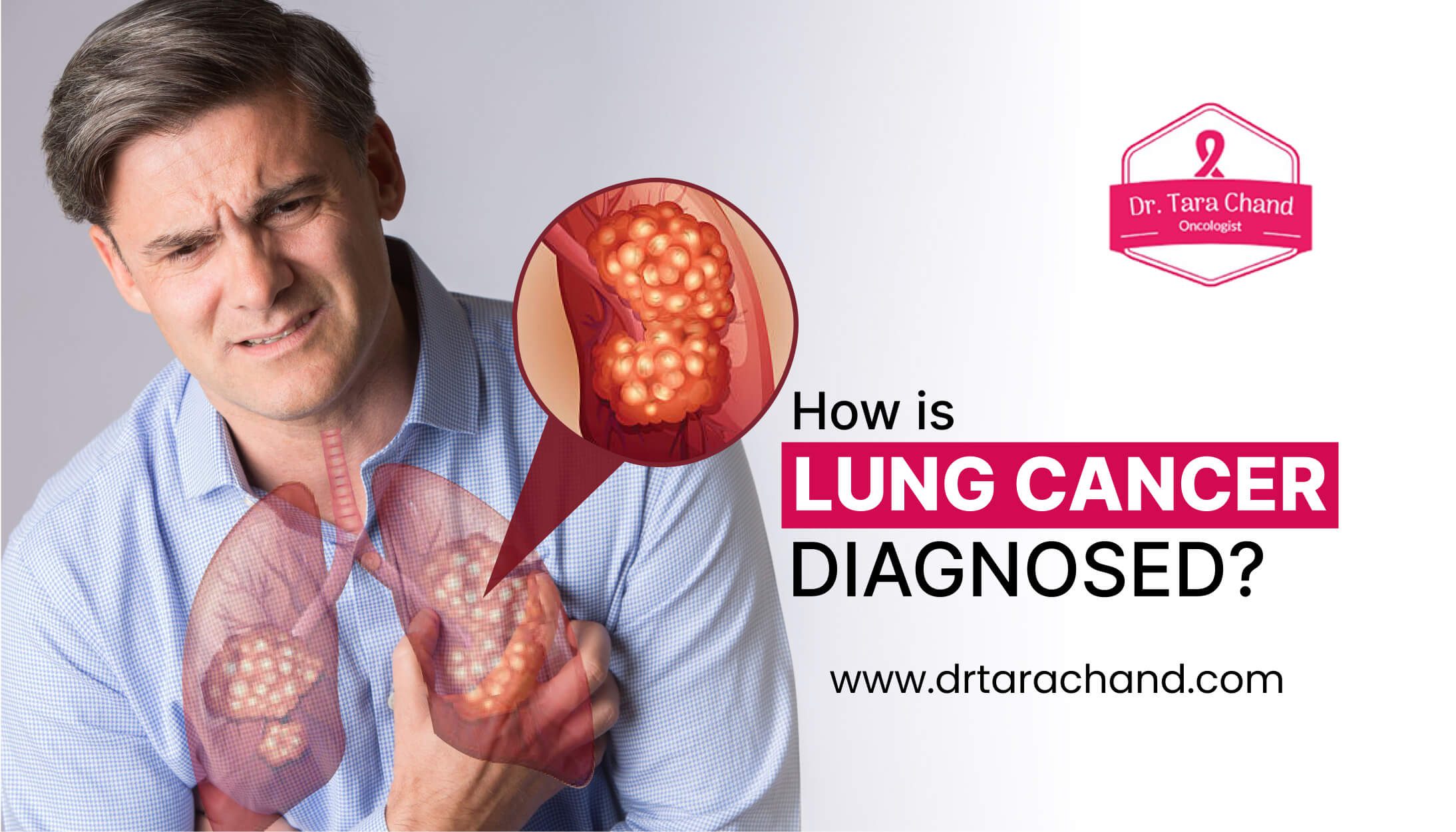
How is lung cancer diagnosed?: Cancer is among those diseases that are very common in the present generation. As compared to previous times, more people are more prone to it in the present times. In this, we are discussing lung cancer.
According to research conducted by World Health Organisation, every year, so many people suffer from lung cancer and unfortunately die because they did not receive the diagnosis and treatment on time. This majorly happens because people ignore the symptoms and changes happening in their bodies. In the end, when they reach the doctor, no time is there for them to get rid of it.
Well, do understand to avoid such complications, it is important to get the diagnosis as soon as possible. For diagnosis, people can approach Dr. Tarachand Gupta in Jaipur as he is one of the Best medical oncologist in Jaipur.
But before you approach him, we would like to let you know about the diagnosis of lung cancer in detail. So that there will be no confusion, and in case there is any question, you can ask the doctor directly about it. Let’s discuss the diagnosis in detail!
How is lung cancer diagnosed?
In this section, we discuss Different diagnosing techniques that doctors consider for lung cancer diagnosis:
· X-Ray:
X-Ray is a way of finding out the reason for different symptoms in patients suffering from lung cancer. It can tell doctors whether there is a tumor present or not, what kind of tumor it is, how big it is, and how far it has spread. It can be used as a screening tool for people diagnosed with lung cancer, so they know if they have any risk factors or not.
· Sputum cytology:
Sputum cytology is a test that is used to diagnose lung cancer. It involves taking a sample of the patient’s sputum and examining it under a microscope. It is one of the most common tests for diagnosing lung cancer. In order to perform this test, the patient must be able to cough up sputum on their own, which can be difficult for some patients with advanced disease.
The test can also be used to detect other lung diseases such as chronic obstructive pulmonary disease (COPD) and tuberculosis. The test is usually done by a pathologist and takes about 30 minutes.
· CT-Scan:
CT-Scans are a very common and safe procedure. They are painless and can be done in just a few minutes, which makes them ideal for patients who aren’t able to tolerate radiation therapy or chemotherapy. It has many advantages over other forms of scans, such as chest X-Ray and MRI, as they are more accurate in detecting lung cancer than other scans. It is used for diagnosing lung cancer, and it can also be used to detect other cancers.
· MRI:
The MRI is a diagnostic imaging procedure that uses magnetic fields and radio waves to produce detailed images of the body. It is used to diagnose lung cancer, among other diseases. It is a highly sensitive test and the best way to diagnose lung cancer. Also, doctors use it to detect tumors and other abnormalities in the brain, spine, chest, liver, etc.
· Biopsy:
A biopsy is a test for diagnosing lung cancer. It is a surgical procedure to remove tissue samples from the lungs. Doctors usually perform a biopsy under general anesthesia, and the patient spends about an hour in the hospital.
They do it by using a needle or a thin, hollow tube in link to a vacuum that removes tissue from the lungs without causing damage to them. They use it to obtain cells and fluid from the lungs that are then examined under microscopes.
· Complete blood count Test:
A complete blood count test is a diagnostic test that helps to detect the presence of cancerous cells in the blood. Doctors do it by taking a sample of blood from a vein in the arm. The sample they put onto a thin, plastic slide and stain it with one of several dyes that react with cells in different ways.
The test is in consideration with other tests such as an MRI or chest x-ray. A complete blood count test is also in use to diagnose various diseases and conditions, such as anemia, leukemia, lymphoma, hemoglobinopathy, leukemia, and more.
Treatment options for Lung cancer:
Lung cancer treatment options:
1. Surgery:
This is the most common treatment option for lung cancer. The surgeon removes all or part of a tumor from your body.
2. Chemotherapy:
Chemotherapy is in use to destroy any remaining tumor cells in your body. It works by killing fast-growing cells and preventing them from dividing into new cells that might grow into another tumor.
3. Radiotherapy:
Radiotherapy uses high-energy particles to kill fast-growing cells and prevent them from dividing into new ones that might grow into another tumor. It kills cancerous tissue without damaging healthy tissue.
Following are the diagnosing techniques that doctors consider for lung cancer diagnosis. It is important for patients to reach the doctor’s time and get it as soon as possible. Be sure to let the doctor know about every change you are experiencing so that they can figure out whether the changes you are experiencing are in link to lung cancer or something else that can cause the same problems too!
FAQ: How is Lung Cancer Diagnosed?
Q.1 – What are the key diagnostic tests that can be done on a patient?
Answer – The key diagnostic tests that can be done on a patient are the physical examination, complete blood count, urinalysis, and chest X-ray.
- The physical examination is to detect any abnormalities in the patient’s skin, respiratory system, heart, lungs, abdomen, and other internal organs.
- The complete blood count is a test to measure the number of white blood cells in the blood.
- Urine analysis is a test that measures chemical substances in the urine.
- Chest X-ray is a test that uses radiation to create images of the inside of the chest.
Q.2 – What are the symptoms of lung cancer?
Answer – Symptoms of lung cancer may include: coughing up blood, chest pain, shortness of breath, and weight loss. If you find yourself experiencing these symptoms, it’s important to get in touch with your doctor as soon as possible.
Q.3 – What are the different types of lung cancer?
Answer – Lung cancer is a disease that affects the lungs and airways. It can happen anything from smoking to exposure to asbestos fibers. There are different types of lung cancer depending on where the tumor begins in the lung tissue, how far it has spread, how long it has been present in an individual, and whether or not it is slow-growing.
Q.4 – Who is at risk of developing lung cancer?
Answer – Lung cancer happens from smoking, radon gas, or exposure to asbestos. It is also in link with occupational exposure to certain chemicals and air pollutants. People who are in contact with such particles are at the highest risk of its development.
Q.5 – Who is the best doctor for lung cancer treatment in Jaipur?
Answer – Dr. Tarachand Gupta is the best doctor for cancer treatment in Rajasthan people can approach.
